Timeline of Human History: From Stone Age to Modern Era. Understanding the timeline of human history provides insight into how civilizations evolved, how technology progressed, and how societies shaped the world we live in today. From the earliest Stone Age humans to the modern digital era, human history is marked by remarkable inventions, cultural shifts, and groundbreaking discoveries.
The Stone Age: The Dawn of Humanity
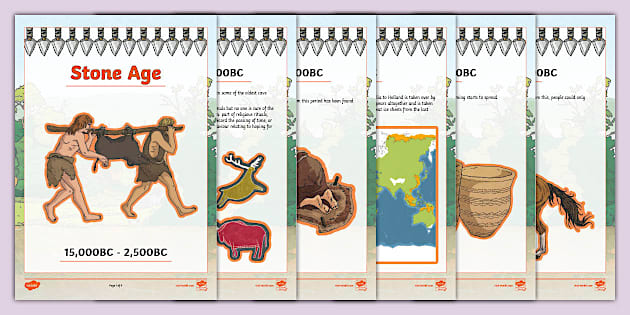
The Stone Age represents the earliest period of human existence, spanning millions of years. During this era, humans primarily used stone tools and developed basic survival skills.
Early Stone Age (Paleolithic Period)
The Paleolithic period, also known as the Old Stone Age, began around 2.5 million years ago and lasted until approximately 10,000 BCE. Humans were primarily hunter-gatherers, relying on hunting animals and foraging for plants.
Key Developments
- Stone Tools: Early humans used simple tools like hand axes, scrapers, and blades made of stone.
- Cave Art: Cave paintings, such as those in Lascaux, France, provide evidence of early human creativity.
- Fire Mastery: Humans learned to control fire for warmth, cooking, and protection.
Example
The discovery of the Olduvai Gorge in Tanzania revealed stone tools and fossilized remains of early hominins, helping scientists understand Paleolithic life.
Middle Stone Age (Mesolithic Period)
The Mesolithic era, from around 10,000 BCE to 8,000 BCE, marked a transition period where humans began settling in one place, leading to early forms of agriculture.
Key Developments
- Domestication of Animals: Dogs were among the first animals domesticated.
- Fishing Tools: Early humans invented nets and hooks for fishing.
- Microliths: Small stone tools used for hunting and food processing.
The Neolithic Era: Agriculture and Settlements
The Neolithic period (around 8,000 BCE to 3,000 BCE) saw humans transition from nomadic lifestyles to agriculture-based societies. This shift laid the foundation for civilization.
Key Developments
- Farming: Wheat, barley, and rice cultivation began.
- Permanent Settlements: Villages like Çatalhöyük in Turkey emerged.
- Pottery and Textiles: Humans created pottery for storage and developed weaving techniques.
Example
The Neolithic Revolution was a global phenomenon that allowed populations to grow and societies to become more complex, eventually leading to urban settlements.
The Bronze Age: Birth of Civilizations
The Bronze Age (around 3,000 BCE to 1,200 BCE) introduced the use of metal tools and the rise of early civilizations in Mesopotamia, Egypt, and the Indus Valley.
Key Developments
- Metal Tools and Weapons: Bronze, an alloy of copper and tin, replaced stone tools.
- Urbanization: Cities such as Uruk in Mesopotamia grew rapidly.
- Writing Systems: Cuneiform in Mesopotamia and hieroglyphs in Egypt were invented.
Example
The Code of Hammurabi in Babylon (around 1754 BCE) is one of the earliest known legal codes, highlighting the advanced societal structure during the Bronze Age.
The Iron Age: Expansion and Innovation
The Iron Age (around 1,200 BCE to 600 CE) was characterized by the widespread use of iron tools and weapons, enabling agricultural expansion and military dominance.
Key Developments
- Iron Tools and Weapons: Stronger and more durable than bronze, iron tools boosted productivity.
- Trade Networks: Trade routes expanded, connecting regions across Africa, Europe, and Asia.
- Early Empires: The Assyrian, Persian, and Mauryan empires flourished during this period.
Example
The Terracotta Army in China, built during the Qin dynasty, demonstrates the engineering prowess and organizational skills of early Iron Age civilizations.
Classical Antiquity: The Rise of Great Civilizations
Classical antiquity (600 BCE to 500 CE) marks a period where philosophy, science, and political systems flourished.
Key Civilizations
- Greece: Birthplace of democracy, philosophy, and Olympic Games.
- Rome: Advanced engineering, law, and governance systems shaped Western civilization.
- India and China: The Maurya Empire and the Han Dynasty made significant contributions to governance, trade, and culture.
Key Achievements
- Architecture: Parthenon in Greece, Colosseum in Rome.
- Mathematics and Science: Euclid’s geometry and Aryabhata’s astronomical calculations.
- Literature: Epics like the Iliad and the Mahabharata were written.
The Middle Ages: Feudalism and Cultural Transformation
The Middle Ages (500 CE to 1500 CE) were a period of feudal societies, religious dominance, and gradual cultural advancements.
Early Middle Ages (500–1000 CE)
- Feudalism: Kings granted land to nobles in exchange for loyalty and military service.
- Monastic Life: Monasteries preserved knowledge through manuscripts.
- Viking Exploration: Vikings explored and traded across Europe.
High Middle Ages (1000–1300 CE)
- Agricultural Innovations: The heavy plow and three-field system increased productivity.
- Gothic Architecture: Cathedrals like Notre-Dame were built.
- Trade Expansion: The rise of merchant cities such as Venice and Florence.
Late Middle Ages (1300–1500 CE)
- Plague: The Black Death decimated Europe’s population.
- Early Universities: Institutions like the University of Bologna promoted higher learning.
- Renaissance Seeds: Art and science began flourishing in Italy.
The Renaissance and Early Modern Era
The Renaissance (14th to 17th century) marked a revival of art, science, and learning in Europe, transitioning into the Early Modern Era.
Key Developments
- Art and Culture: Masters like Leonardo da Vinci and Michelangelo emerged.
- Scientific Revolution: Copernicus and Galileo revolutionized astronomy.
- Exploration: Christopher Columbus and Vasco da Gama expanded global trade networks.
Example
The invention of the printing press by Johannes Gutenberg in 1440 allowed knowledge to spread rapidly across Europe, fueling education and literacy.
The Industrial Revolution: Technology and Transformation
The Industrial Revolution (18th–19th century) dramatically changed economies, societies, and lifestyles.
Key Developments
- Mechanized Industry: Steam engines, textile machines, and factories revolutionized production.
- Urbanization: People moved from rural areas to cities for work.
- Transportation: Railroads and steamships connected the world like never before.
Example
The city of Manchester, England, became a hub of textile manufacturing, exemplifying industrialization’s impact on urban life.
The Modern Era: Globalization and Digital Age
The Modern Era (20th–21st century) has seen unprecedented technological, social, and political changes.
Key Developments
- World Wars: Two global conflicts reshaped international borders and politics.
- Civil Rights Movements: Struggles for equality, freedom, and democracy advanced globally.
- Digital Revolution: Computers, the internet, and smartphones transformed communication and commerce.
Example
The launch of the internet in the 1990s revolutionized how humans access information, communicate, and conduct business worldwide.
Timeline of Human History (Summary)
| Era | Approximate Dates | Key Features |
|---|---|---|
| Stone Age | 2.5 million BCE – 3,000 BCE | Stone tools, fire, hunting-gathering |
| Bronze Age | 3,000 BCE – 1,200 BCE | Metal tools, early civilizations, writing |
| Iron Age | 1,200 BCE – 600 CE | Iron technology, trade, empires |
| Classical Antiquity | 600 BCE – 500 CE | Philosophy, law, architecture, empires |
| Middle Ages | 500 – 1500 CE | Feudalism, Gothic architecture, universities |
| Renaissance & Early Modern | 14th – 17th century | Art, science, exploration |
| Industrial Revolution | 18th – 19th century | Mechanized production, urbanization |
| Modern Era | 20th – 21st century | Digital technology, globalization |
FAQs About Human History Timeline
What is the earliest known human civilization?
The Sumerians in Mesopotamia (around 3,500 BCE) are considered the earliest known civilization, famous for creating cuneiform writing and early urban centers.
When did humans start using tools?
Humans began using stone tools around 2.5 million years ago during the Paleolithic period.
What was the Neolithic Revolution?
The Neolithic Revolution was the transition from nomadic hunter-gatherer societies to agriculture-based communities, leading to permanent settlements.
How did the Industrial Revolution change human society?
The Industrial Revolution mechanized production, increased urbanization, improved transportation, and introduced new technologies, fundamentally altering economies and lifestyles.
What marks the beginning of the Modern Era?
The Modern Era is generally considered to begin in the 20th century, marked by technological advancements, global conflicts, and the rise of digital technologies.
Human history is a fascinating journey that shows how innovation, culture, and human resilience have shaped the world. From stone tools to smartphones, the evolution of humanity reflects our creativity and adaptability across millennia.