How Wars and Conflicts Changed the Course of History. Wars and conflicts have shaped human civilization for thousands of years. Beyond the immediate destruction, they have transformed societies, redrawn borders, and catalyzed technological, political, and cultural shifts. From ancient battles to modern global conflicts, wars have often acted as turning points in history, leaving legacies that influence the world to this day.
The Role of Wars in Shaping Ancient Civilizations
Even in ancient times, wars determined which empires rose and which fell. Conflicts influenced trade, governance, and societal structures, often accelerating innovation and cultural development.
The Persian Wars: Greek Identity and Democracy
Between 499 BCE and 449 BCE, the Greek city-states faced the mighty Persian Empire in a series of conflicts known as the Persian Wars.
Key Impacts
- Strengthening Greek Unity: Though often fragmented, the Greek city-states united to resist Persia.
- Rise of Athens: Athens emerged as a cultural and political powerhouse, fueling democracy and arts.
- Military Innovation: The phalanx formation and naval tactics became influential in future warfare.
Example
The Battle of Marathon (490 BCE) demonstrated the strategic prowess of a smaller force overcoming a larger empire, shaping Greek confidence and cultural identity.
The Peloponnesian War: Power Shifts in Ancient Greece
The Peloponnesian War (431–404 BCE) between Athens and Sparta altered the balance of power in Greece.
Key Impacts
- Decline of Athens: Athens’ defeat ended its golden age and curtailed its influence.
- Spartan Hegemony: Sparta temporarily dominated, reshaping Greek political dynamics.
- Historical Lessons: The conflict inspired political analysis, as documented by Thucydides, influencing future understanding of war and statecraft.
Wars of Empire: Expansion and Collapse
Empires expanded through conquest, often leaving behind significant cultural and technological legacies.
Alexander the Great: Conquests That Spread Culture
Alexander the Great (356–323 BCE) conquered territories from Greece to India.
Key Impacts
- Hellenistic Culture: Greek language, arts, and philosophy spread across the conquered regions.
- Urbanization: Cities like Alexandria became centers of learning and commerce.
- Military Innovation: Cavalry tactics and siege engines influenced future military strategies.
Example
Alexander’s conquests led to cross-cultural exchanges that shaped medicine, astronomy, and philosophy in regions far beyond Greece.
The Fall of the Roman Empire: Invasions and Internal Strife
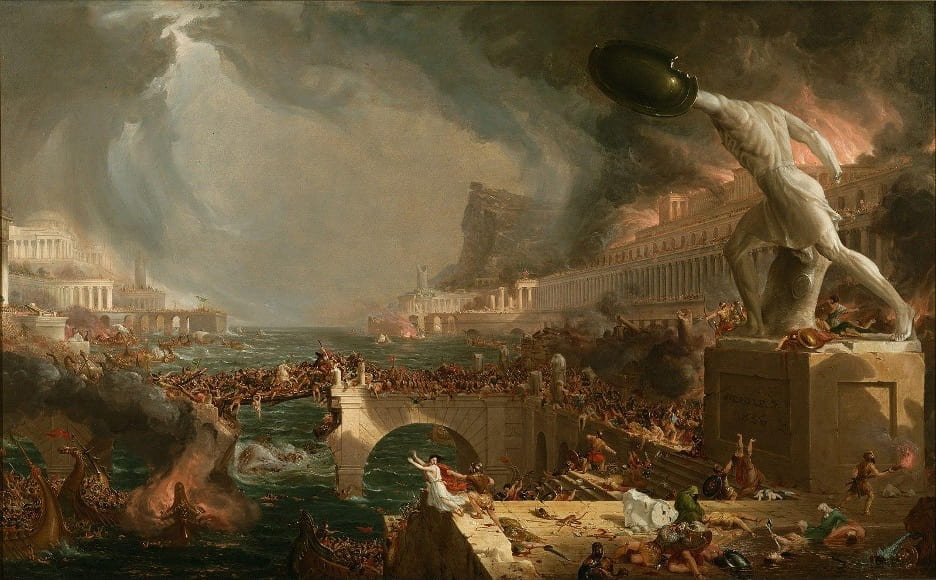
The Roman Empire faced numerous invasions from Germanic tribes and internal conflicts, culminating in its fall in 476 CE.
Key Impacts
- Political Fragmentation: Western Europe entered the Middle Ages, characterized by feudalism and decentralized rule.
- Cultural Preservation: The Byzantine Empire preserved Roman laws, architecture, and literature.
- Shift in Power: New kingdoms emerged, laying the foundation for modern European nations.
Example
The sack of Rome by the Visigoths in 410 CE symbolized the vulnerability of even the greatest empires, prompting political and military reevaluation across Europe.
Wars and Religious Conflicts
Religious ideologies have often fueled wars, reshaping regions and influencing governance.
The Crusades: Religious Zeal and Cultural Exchange
The Crusades (1096–1291) were a series of religious wars initiated by European Christians to reclaim the Holy Land from Muslim rule.
Key Impacts
- Cultural Exchange: Europeans were introduced to Middle Eastern science, medicine, and mathematics.
- Economic Shifts: Trade between Europe and the Middle East expanded significantly.
- Political Repercussions: The power of monarchs increased as they mobilized resources for war.
Example
The capture of Jerusalem in the First Crusade demonstrated the ability of European powers to coordinate across kingdoms, influencing future military coalitions.
The Thirty Years’ War: Europe Reshaped
The Thirty Years’ War (1618–1648) started as a religious conflict between Protestants and Catholics but evolved into a struggle for political dominance in Europe.
Key Impacts
- Population Decline: Some regions lost up to one-third of their population, reshaping demographics.
- Peace of Westphalia: Introduced the concept of state sovereignty, forming the basis of modern international law.
- Economic Shifts: Devastation in central Europe shifted trade routes and economic power.
Example
The war highlighted the destructive potential of prolonged conflicts and the need for diplomatic frameworks, influencing European politics for centuries.
Wars and Technological Advancements
Conflicts often accelerate technological progress as nations seek advantages over their adversaries.
World War I: Industrial Warfare and Innovation
World War I (1914–1918) introduced large-scale industrial warfare.
Key Impacts
- Weapons Technology: Tanks, machine guns, and chemical weapons transformed battlefields.
- Medical Advances: Innovations in trauma care and prosthetics emerged.
- Societal Shifts: Women entered the workforce in large numbers, reshaping gender roles.
Example
The development of tanks revolutionized military strategy, influencing armored warfare in subsequent conflicts.
World War II: Global Conflict and Scientific Breakthroughs
World War II (1939–1945) impacted nearly every corner of the globe.
Key Impacts
- Atomic Age: The development of nuclear weapons changed geopolitics forever.
- Computing and Communication: Code-breaking efforts led to early computers and advances in cryptography.
- International Institutions: The United Nations was formed to prevent future global conflicts.
Example
The Manhattan Project, while controversial, marked the beginning of nuclear physics as a tool of both defense and diplomacy.
Civil Wars and Revolutions: Internal Conflicts with Lasting Consequences
Internal conflicts have often reshaped nations, influencing governance, economy, and society.
The American Civil War: End of Slavery and Industrialization
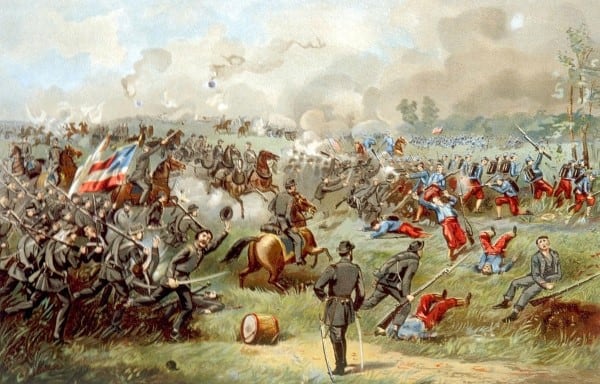
The American Civil War (1861–1865) was fought over slavery, state rights, and political power.
Key Impacts
- Abolition of Slavery: The Thirteenth Amendment ended legal slavery in the United States.
- Industrial Growth: The war accelerated industrialization and infrastructure development.
- Federal Authority: Strengthened the power of the federal government over states.
Example
The use of railroads and telegraphs during the Civil War demonstrated the strategic importance of industrial resources in modern warfare.
The French Revolution: Wars and Political Transformation
The French Revolution (1789–1799) led to a series of conflicts across Europe.
Key Impacts
- Rise of Napoleon: Military genius reshaped European borders and laws.
- Democratic Ideals: Inspired republican movements worldwide.
- Modern Warfare: Introduced mass conscription and citizen armies.
Example
Napoleon’s campaigns spread the Napoleonic Code across Europe, influencing modern legal systems to this day.
How Wars Have Shaped Modern Society
Wars have influenced not only political and territorial boundaries but also societal structures, economics, and international law.
Creation of Nation-States
Conflicts often unify people under national identities, creating the modern concept of nation-states.
- Example: The unification of Germany after the Franco-Prussian War (1870–1871) reshaped European politics.
Economic Transformations
Wars stimulate industries, labor movements, and technological progress while also creating economic crises that reshape policies.
- Example: Post-World War II reconstruction led to the Marshall Plan, reshaping Europe’s economy.
Social and Cultural Change
Wars accelerate social reforms, influence art and literature, and redefine cultural norms.
- Example: World War I led to shifts in gender roles, with women entering the workforce and gaining voting rights in many countries.
FAQs About Wars and Conflicts in History
How have wars historically changed national borders?
Wars often lead to territorial expansion or contraction. Examples include the Treaty of Versailles after World War I and the reshaping of Europe after the Napoleonic Wars.
Can wars positively impact technological advancement?
Yes. Many modern technologies, such as aviation, computing, and medical innovations, emerged or accelerated during wartime.
Why do some wars have long-lasting cultural impacts?
Wars often disrupt societies, create narratives of heroism or tragedy, and inspire art, literature, and collective memory for generations.
Which wars had the most influence on modern political systems?
The Thirty Years’ War introduced state sovereignty, while the American and French revolutions shaped democratic governance models worldwide.
How do modern conflicts differ from ancient wars?
Modern conflicts involve advanced technology, global alliances, and international legal frameworks, whereas ancient wars were often territorial or religious without the global scope or technological complexity.
Conclusion
Wars and conflicts are more than episodes of violence; they are forces that have profoundly shaped human civilization. From the rise and fall of empires to revolutions that created modern nations, conflicts have accelerated technological, social, and political transformations. Understanding the history of war is crucial for comprehending the evolution of societies and the global landscape today.