How Climate Change Affected Ancient Civilizations. Throughout history, climate has played a critical role in shaping human societies. Ancient civilizations thrived or collapsed not just because of politics or war, but often due to environmental changes. Shifts in rainfall, temperature, and natural disasters influenced agriculture, trade, urban planning, and migration. By studying the relationship between climate and ancient societies, historians and archaeologists can better understand the factors behind their rise and fall—and gain insights relevant to today’s climate challenges.
This article explores how climate change affected ancient civilizations, highlighting key examples, environmental evidence, societal impacts, and lessons for the modern world.
Understanding Climate Change in Ancient Times
Climate change is not only a modern phenomenon. The Earth has experienced natural fluctuations over thousands of years, affecting rainfall patterns, temperature, and sea levels.
Types of Ancient Climate Change
- Droughts: Extended periods of low rainfall affect crops and water supply.
- Cooling Periods: Decreased temperatures leading to shorter growing seasons and glacial expansion.
- Warming Periods: Higher temperatures are causing desertification or rising sea levels.
- Extreme Weather Events: Floods, storms, and volcanic eruptions are disrupting societies.
These changes often occurred gradually over decades or centuries, but their cumulative impact could drastically alter civilizations.
The Indus Valley Civilization and River Shifts
Overview
The Indus Valley Civilization (circa 3300–1300 BCE) flourished in present-day Pakistan and northwest India. Cities like Mohenjo-daro and Harappa were highly organized, with advanced sanitation, urban planning, and trade networks.
Climate Impact
- Evidence from river sediment cores indicates shifts in monsoon patterns and river courses.
- Reduced rainfall led to the drying of rivers like the Ghaggar-Hakra, a possible site of the mythical Saraswati River.
- Agricultural failures forced populations to migrate, weakening urban centers.
Societal Consequences
- Decline in trade and economic activity
- Population dispersion into smaller villages
- Loss of urban planning and centralized governance
The Indus Valley shows how dependence on rivers and agriculture made civilizations vulnerable to climate variability.
Ancient Egypt and Nile Flooding Patterns
Overview
Egyptian civilization (circa 3100 BCE–30 BCE) relied heavily on the annual flooding of the Nile River for fertile soil.
Climate Influence
- Paleoclimate data suggests periods of low Nile floods caused crop failures.
- Extended droughts during the First and Second Intermediate Periods led to political instability.
Consequences
- Famines and population stress
- Revolts and the rise of new dynasties
- Adaptation through irrigation and water management
Egypt demonstrates the critical role of water systems in sustaining ancient societies and the consequences of climate stress.
The Maya Civilization and Drought
Overview
The Maya civilization (circa 2000 BCE–1500 CE) in Mesoamerica reached its peak between 250–900 CE, constructing monumental cities like Tikal, Copán, and Palenque.
Climate Evidence
- Lake sediment and cave stalagmite analysis indicate prolonged drought periods coinciding with the Classic Maya collapse.
- Deforestation may have worsened local climate conditions by altering water cycles.
Impacts on Society
- Crop failures leading to food shortages
- Intensified warfare among city-states
- Abandonment of urban centers and migration to smaller villages
The Maya collapse illustrates the vulnerability of complex societies to prolonged environmental stress.
Mesopotamia and Salinization
Overview
Mesopotamia (circa 3500–539 BCE) thrived between the Tigris and Euphrates rivers, developing irrigation-based agriculture.
Climate and Environmental Challenges
- Reduced rainfall combined with over-irrigation caused soil salinization.
- Rising temperatures and water scarcity affected crop yields.
Societal Impacts
- Declining agricultural productivity weakened city-states like Ur and Babylon.
- Population movements and increased competition for resources
- Political instability and eventual conquest by neighboring empires
Mesopotamia highlights how human activity and climate interplay can accelerate societal stress.
The Roman Empire and the Late Antique Little Ice Age
Overview
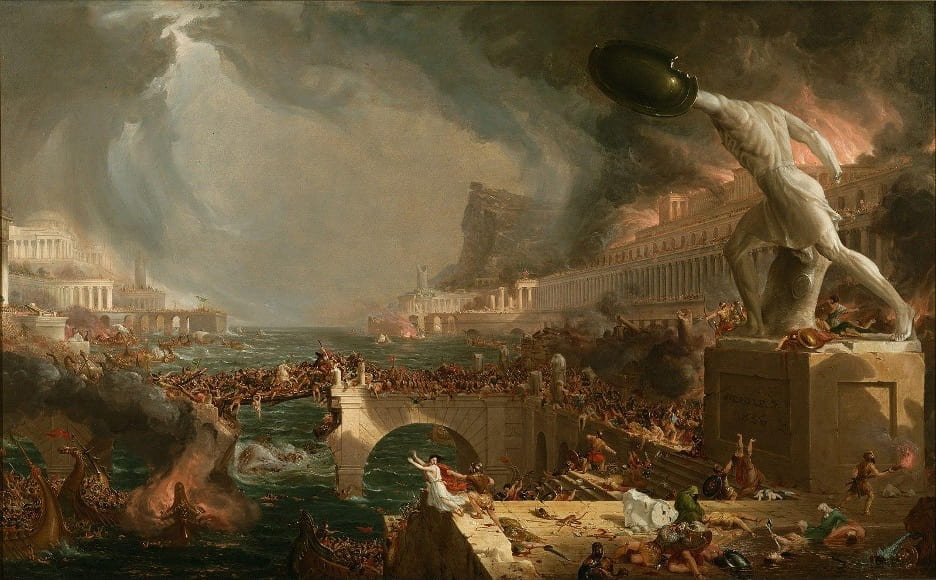
The Roman Empire (27 BCE–476 CE) experienced fluctuations in climate, including the Late Antique Little Ice Age (circa 536–660 CE).
Climate Evidence
- Tree-ring and ice-core data indicate cooler temperatures and reduced solar radiation.
- Volcanic eruptions around 536 CE triggered widespread crop failures.
Societal Effects
- Food shortages and famine in Europe and the Mediterranean
- Economic contraction and population decline
- A contributing factor to the decline of the Western Roman Empire
Rome’s history shows how sudden climate events can exacerbate political and economic vulnerabilities.
The Ancestral Puebloans (Anasazi) and Southwestern Droughts
Overview
The Ancestral Puebloans (circa 100–1600 CE) inhabited the Four Corners region of the United States, building cliff dwellings and complex communities.
Climate Evidence
- Tree-ring data reveal severe droughts in the 12th and 13th centuries.
- Reduced water availability undermined maize agriculture.
Impacts on Communities
- Abandonment of major settlements like Chaco Canyon and Mesa Verde
- Migration to more hospitable areas
- Cultural transformation and reorganization of social structures
This case emphasizes how arid environments magnify the effects of climate change on human societies.
The Khmer Empire and Monsoon Variability
Overview
The Khmer Empire (802–1431 CE) in Southeast Asia is renowned for its monumental temple complexes, including Angkor Wat.
Climate Influence
- Lake sediment and tree-ring records show cycles of extreme monsoon floods and prolonged droughts.
- Variability disrupted rice agriculture, the empire’s economic foundation.
Societal Consequences
- Urban abandonment and decline of centralized authority
- Reduced agricultural output weakened the state
- Increased vulnerability to external invasions
The Khmer example illustrates the fragility of agricultural empires dependent on consistent monsoon patterns.
Lessons from Ancient Climate Challenges
Common Patterns
- Dependence on agriculture and water made civilizations vulnerable to climate fluctuations.
- Environmental stress often compounds existing social, political, or economic problems.
- Societies that adapted through irrigation, migration, or diversification fared better.
Modern Relevance
- Lessons from history can inform modern adaptation strategies.
- Understanding human-environment interactions helps predict societal responses to climate change.
- Ancient civilizations provide case studies for resilience and collapse under environmental stress.
Methods for Studying Ancient Climate Impacts
Scientific Techniques
- Paleoclimatology: Using ice cores, tree rings, and sediment to reconstruct climate history
- Archaeobotany: Studying ancient plant remains to assess agricultural conditions
- Geoarchaeology: Examining soil, river, and erosion patterns
- Isotope Analysis: Revealing diet, water use, and migration patterns
Historical Evidence
- Written records of droughts, famines, and floods
- Architectural adaptations like irrigation, reservoirs, and canals
- Cultural narratives and myths reflecting environmental challenges
These methods allow researchers to link climate events with societal changes accurately.
Frequently Asked Questions
Did climate change directly cause the fall of ancient civilizations
Climate change was often a contributing factor, interacting with political, social, and economic stresses rather than acting alone.
How do we know about ancient climate events?
Through a combination of natural records (tree rings, ice cores, sediment) and archaeological evidence (settlements, agriculture, water systems).
Can civilizations adapt to climate change?
Yes, historical examples show that adaptation through technology, migration, and diversification can mitigate environmental impacts.
Are modern societies more resilient than ancient ones
Modern technology and global trade networks provide resilience, but climate change still poses significant risks, including extreme weather, droughts, and sea-level rise.
Why study ancient climate impacts today
Learning from the past helps humanity prepare for current and future climate challenges, emphasizing sustainability, resource management, and adaptation.
Final Thoughts
Climate has always been a powerful force in human history. From the droughts that contributed to the decline of the Maya to Nile flood failures affecting ancient Egypt, environmental changes shaped the course of civilizations. By examining the interactions between climate and society, we gain valuable lessons about resilience, adaptation, and vulnerability.
Ancient civilizations teach us that even the most advanced societies are not immune to environmental pressures. Studying their successes and failures offers insight into managing the complex challenges of climate change today, highlighting the enduring connection between humans and the natural world.