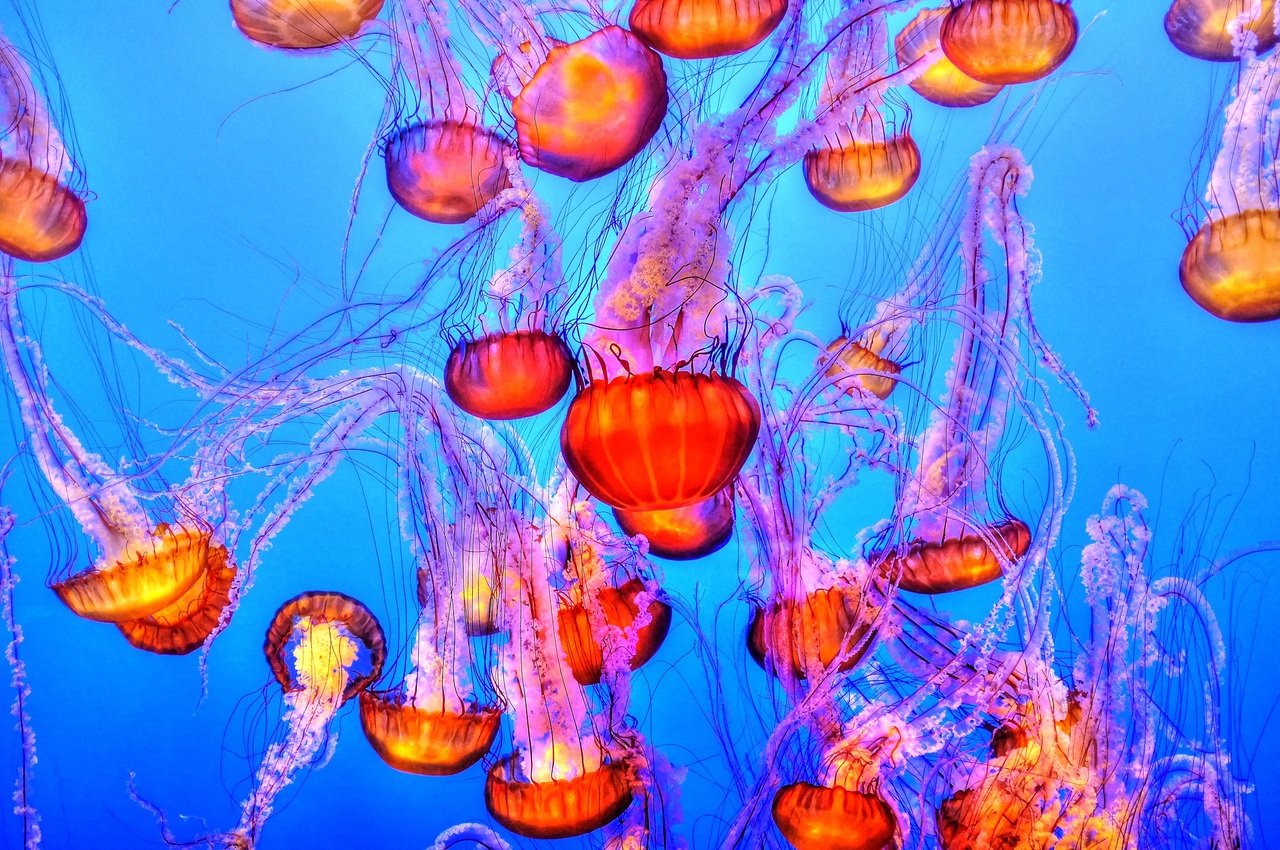
Scientists have identified a new species of deep-sea Jellyfish in the Mariana Trench, dwelling in the dark of the world’s oceans.
In a groundbreaking discovery that pushes the boundaries of our understanding of life in Earth’s most extreme environments, scientists have identified. A new species of deep-sea Jellyfish in the Mariana Trench. The dwelling in the dark, pressurized depths, the deepest known part of the world’s oceans.
 The find, which took place during a recent expedition by marine biologists using remotely operated vehicles (ROVs), highlights not only the resilience of life in harsh conditions. But also the mystery that still lies within the planet’s unexplored deep-sea frontiers.
The Discovery: A Glimpse into the Abyss
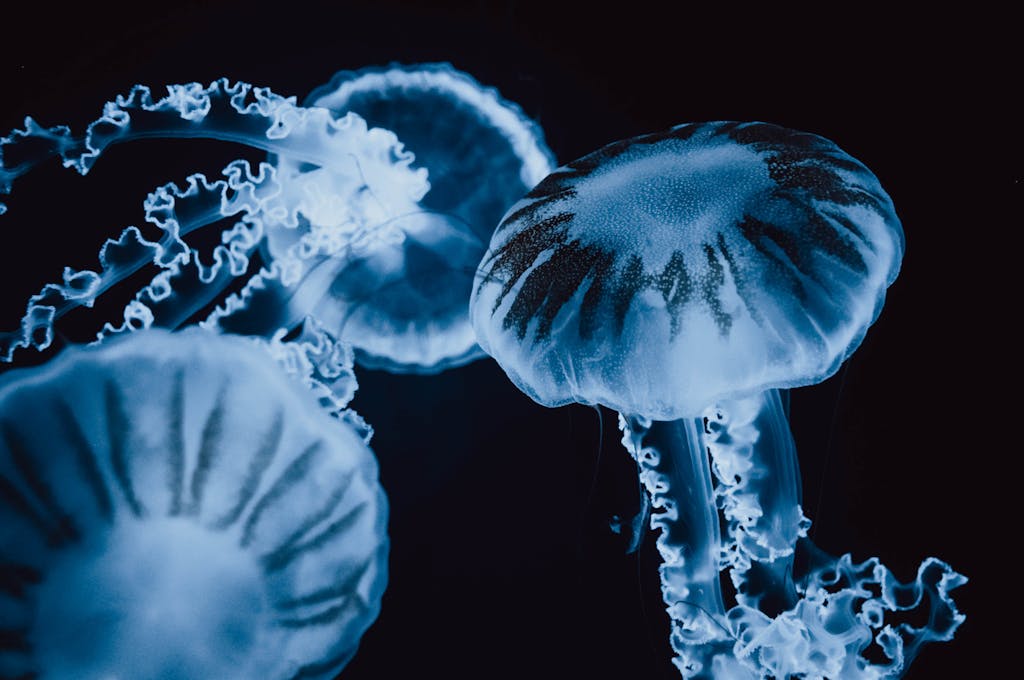
The jellyfish, now tentatively named Stygiomedusa marianaensis, was recorded at a depth of approximately 8,300 meters (27,200 feet) in the trench’s Hadal Zone. Where pressures exceed 1,000 times that at sea level and sunlight cannot penetrate. The ROV, deployed by a team from the Oceanic Research Institute (ORI), captured high-definition video of the creature slowly pulsating through the inky water. Its translucent bell undulates with an ethereal glow.
This remarkable footage reveals a creature unlike any previously documented. With a bell-shaped body measuring nearly one meter in diameter and length, ribbon-like oral arms trailing several meters behind. The jellyfish exhibits both alien beauty and highly specialized adaptations for deep-sea survival.
Dr. Lena Hoshino, lead biologist on the expedition, described the encounter as “a surreal moment of science fiction becoming science fact.”

Anatomy of a Deep-Sea Drifter
Preliminary analysis suggests that Stygiomedusa marianaensis belongs to the same family as Stygiomedusa gigantea, a rarely seen jellyfish previously recorded at abyssal depths. However, several anatomical differences, including the jellyfish’s bell structure, bioluminescent patterns, and feeding appendages, point to this being a distinct species adapted to the extreme hadal environment.
Unlike many jellyfish that use tentacles to capture prey, this species seems to rely on its ribbon-like arms, which appear to drift like streamers in the water. Researchers believe these arms may act like living nets, ensnaring small fish, crustaceans, and marine snow—organic particles drifting down from the surface.
One of the most intriguing features of the jellyfish is its pulsing bioluminescence. Scientists theorize that this glowing mechanism could serve multiple purposes: attracting prey, confusing predators, or even facilitating communication in the deep-sea darkness.
Why This Discovery Matters
The discovery of Stygiomedusa marianaensis is more than just a new entry in the annals of marine biology—it represents a major milestone in our quest to understand Earth’s most inaccessible ecosystems.
The Hadal Zone, defined as regions deeper than 6,000 meters, remains one of the least explored environments on the planet. Extreme pressure, near-freezing temperatures, and complete darkness make it a challenging place for life to exist, let alone thrive. Yet, the discovery of this jellyfish—and others like it—proves that life finds extraordinary ways to adapt.
Technology Behind the Discovery
Such discoveries wouldn’t be possible without state-of-the-art technology. The ROV used by the ORI expedition was equipped with ultra-sensitive cameras, robotic arms, water sampling tools, and environmental sensors. It was designed to withstand pressures exceeding 16,000 psi (pounds per square inch) and transmit live data to researchers aboard the support vessel above.
“Deep-sea exploration is like sending a rover to another planet,” noted expedition engineer Carla DeWitt. “You need to build machines that can survive where humans can’t, and return with information that we can interpret and learn from.”
Artificial intelligence also played a role, helping researchers analyze hours of underwater footage to detect anomalies and identify potential life forms. It was this machine-assisted review that initially flagged the jellyfish’s presence, allowing scientists to focus their attention on the creature in real time.
A New Chapter in Deep-Sea Exploration
The discovery of Stygiomedusa marianaensis serves as a vivid reminder of how little we truly know about Earth’s oceans. It’s estimated that over 80% of the ocean remains unmapped and unexplored, and scientists believe that tens of thousands of marine species are yet to be identified.
As climate change, deep-sea mining, and plastic pollution threaten marine ecosystems, understanding these remote habitats has never been more urgent. Discoveries like this jellyfish could provide critical clues about how life adapts to extreme environments—insights that may inform conservation strategies, medical research, and even the search for extraterrestrial life.
Looking Ahead
The ORI team plans to return to the Mariana Trench later this year with enhanced tools and objectives, hoping to learn more about Stygiomedusa marianaensis and its surrounding ecosystem. Genetic sequencing, water chemistry studies, and longer-term observation devices will help answer many of the lingering questions about this newfound species.
For now, the discovery stands as a testament to the spirit of exploration and the boundless potential of science. In the deepest, darkest corners of our world, life continues to surprise us—delicate, glowing, and full of wonder.
Conclusion
The discovery of a new deep-sea jellyfish species in the Mariana Trench is not just a marvel of marine biology. It’s a window into the unknown. It reminds us that while satellites can map galaxies millions of light-years away. Our planet still holds secrets in the dark folds of its oceans. As technology and curiosity continue to guide our descent into the deep. Who knows what else we’ll uncover, perhaps even answers to questions we haven’t yet learned to ask.