NASA’s Voyager 2 Probe Enters Interstellar Space: A Historic Milestone in Space Exploration
In a groundbreaking development that has captured the imagination of scientists and space enthusiasts alike, NASA’s Voyager 2 probe has officially entered interstellar space. This monumental achievement marks only the second time in human history that a man-made object has crossed the boundary of our solar system, venturing into the vast, unexplored space between stars.
Launched over four decades ago, Voyager 2’s journey is a testament to human ingenuity, scientific perseverance, and our relentless curiosity about the cosmos. With this milestone, NASA continues to extend the frontiers of space exploration, opening new avenues of research about the interstellar environment and our place in the universe.
What Does It Mean to Enter Interstellar Space?
Interstellar space begins where the Sun’s influence ends—a boundary known as the heliopause. This is where the solar wind (a stream of charged particles emitted by the Sun) becomes too weak to push back against the interstellar medium (particles and radiation from other stars).
On November 5, 2018, NASA confirmed that Voyager 2 had crossed this boundary, exiting the heliosphere and entering interstellar space. Unlike its twin, Voyager 1, which crossed this boundary in 2012, Voyager 2 carries more working instruments, giving scientists unprecedented data about this distant region.
A Quick History of Voyager 2
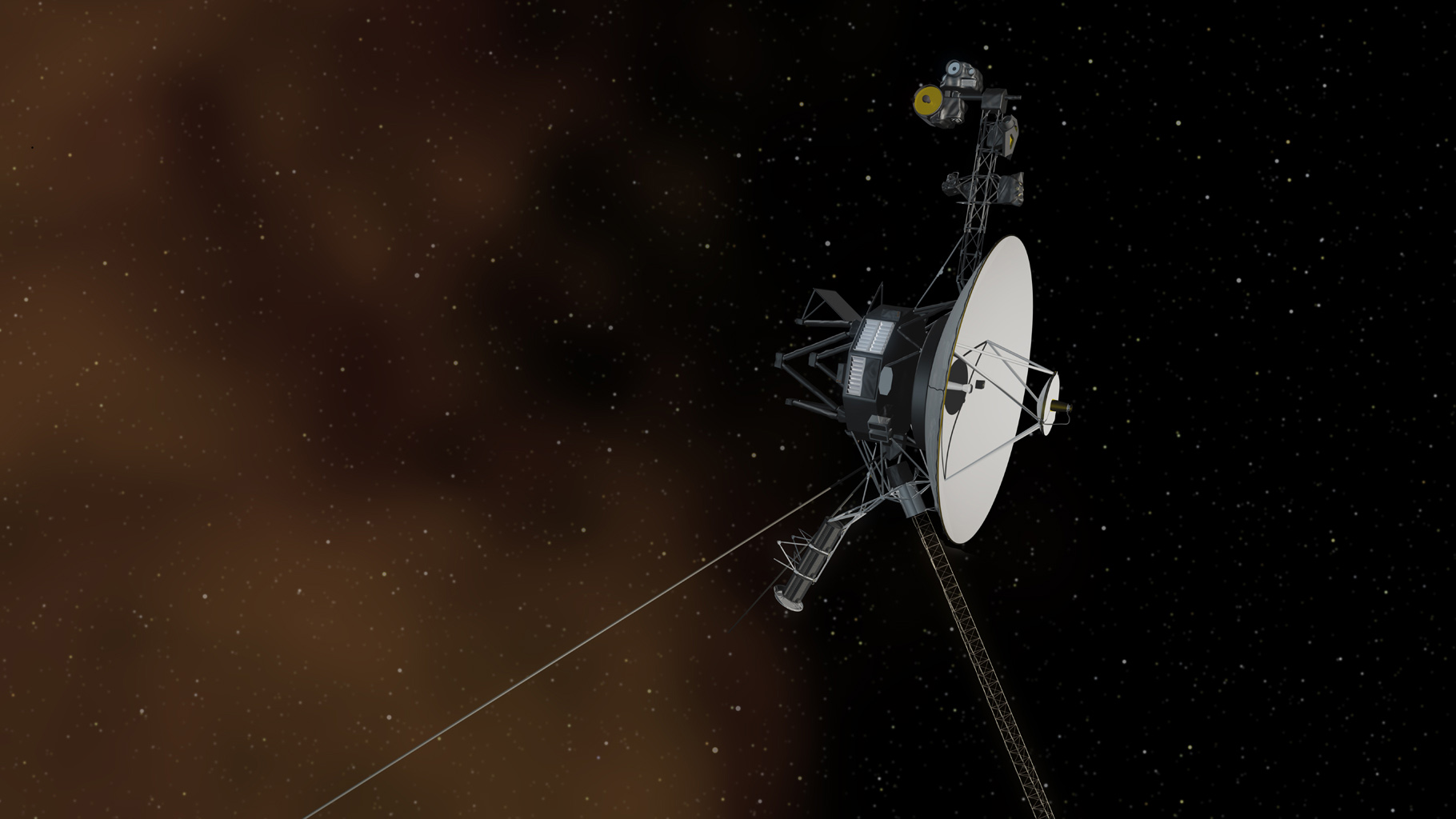
Voyager 2 was launched on August 20, 1977, just weeks before its sister probe, Voyager 1. Originally designed to last just five years, the spacecraft has continued to operate for over 47 years, making it one of NASA’s longest-running missions.
Key highlights of Voyager 2’s mission include:
- First and only spacecraft to visit all four gas giants: Jupiter, Saturn, Uranus, and Neptune.
- Provided the first close-up images of Uranus and Neptune.
- Discovered new moons, rings, and magnetic fields around several planets.
- Captured the iconic “Family Portrait” of the solar system, including Earth’s “Pale Blue Dot” image.
Now in interstellar space, Voyager 2 is expected to continue sending back data for at least a few more years.
What Voyager 2 Is Telling Us About Interstellar Space
Unlike Voyager 1, which had a malfunctioning plasma sensor when it crossed the heliopause, Voyager 2’s instruments were fully operational, allowing scientists to observe the transition in real time.
Here’s what we’re learning:
1. Plasma Density Changes
As Voyager 2 exited the heliosphere, it recorded a dramatic increase in plasma density, confirming it had left the region dominated by the solar wind. This provides concrete evidence of the heliopause boundary and offers insight into the structure of the interstellar medium.
2. Magnetic Field Readings
Interestingly, Voyager 2 detected a similar magnetic field direction before and after crossing the boundary, just like Voyager 1. This finding suggests that the interstellar magnetic field may be closely aligned with the one inside the heliosphere, surprising many astrophysicists.
3. Cosmic Ray Data
Outside the heliosphere, Voyager 2 has encountered higher levels of galactic cosmic rays, which are shielded inside the solar bubble. Studying these particles helps scientists understand how cosmic radiation behaves and how the Sun protects the inner solar system.
How Far Has Voyager 2 Traveled?
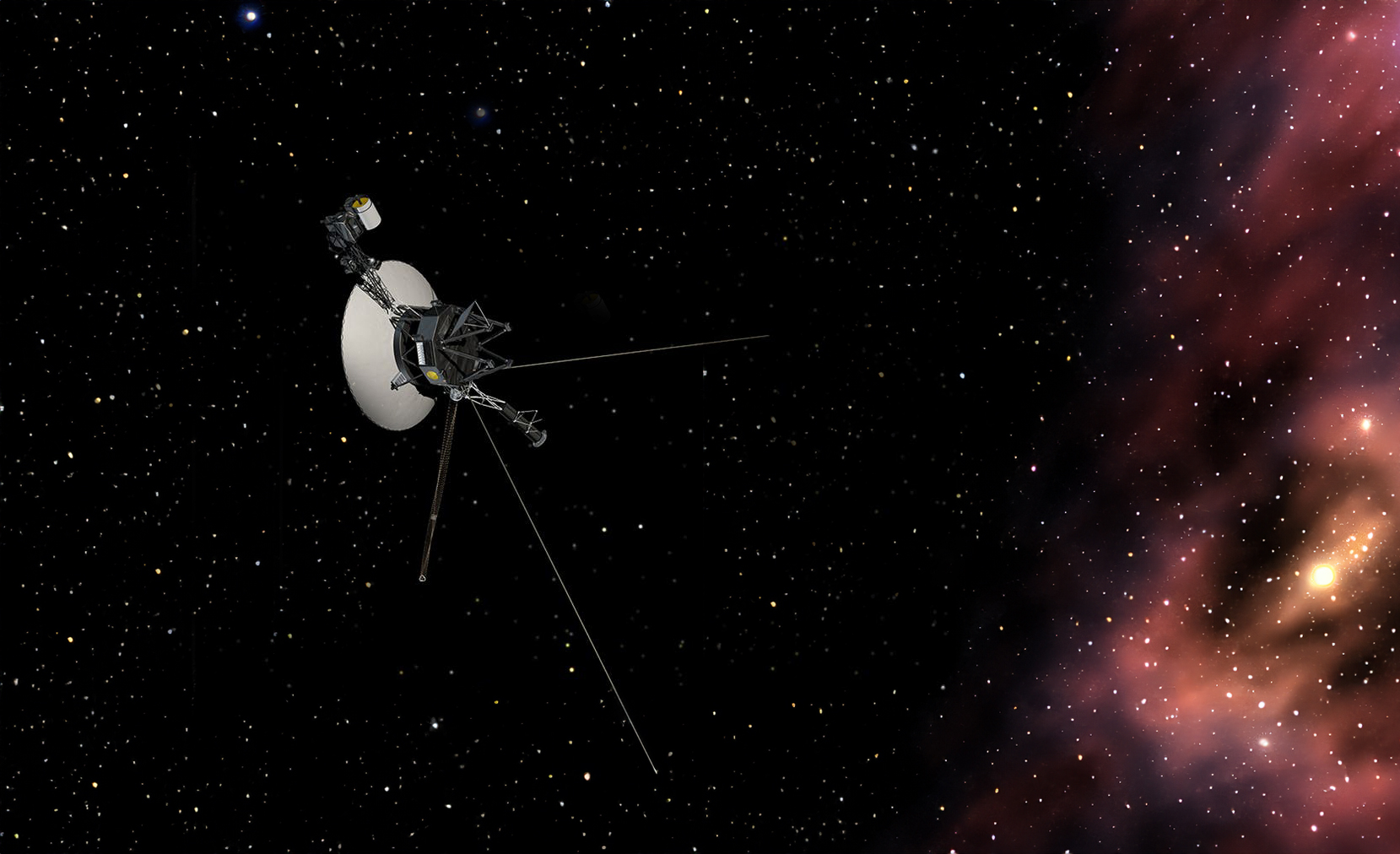
As of mid-2025, Voyager 2 is more than 12 billion miles (over 19 billion kilometers) from Earth and still moving outward at around 34,000 miles per hour. Despite the distance, it continues to communicate with Earth via NASA’s Deep Space Network (DSN)—though each signal takes over 17 hours one way to reach us.
The spacecraft is powered by a radioisotope thermoelectric generator (RTG), which slowly loses power each year. NASA has begun shutting down non-essential systems to conserve energy, with hopes to keep critical instruments running into the 2030s.
Why This Matters: Scientific and Philosophical Impact
Voyager 2’s entry into interstellar space is more than just a technological triumph—it is a symbolic moment for humanity. For the first time, our creations are truly exploring the space between the stars.
Scientific Benefits:
- Helps model how solar systems interact with interstellar environments.
- Improves our understanding of space weather and radiation threats to future missions.
- Provides a unique opportunity to test theories about the galaxy’s structure and composition.
Philosophical Significance:
- Reminds us of Earth’s tiny place in the cosmos—a “mote of dust suspended in a sunbeam,” as Carl Sagan once put it.
- Unites people across borders and cultures through a shared sense of wonder.
- Inspires new generations of scientists, engineers, and dreamers.
Voyager’s Golden Record: A Message to the Stars
One of the most iconic aspects of the Voyager mission is the Golden Record, a 12-inch gold-plated disc carrying sounds, images, and greetings from Earth in 55 languages. It includes:
- Music from Bach, Beethoven, and Chuck Berry
- Images of nature and human life
- A message from then-U.S. President Jimmy Carter
Though the chances of it being discovered by extraterrestrial life are astronomically small, the Golden Record is a time capsule of humanity, drifting through the galaxy for billions of years.
What’s Next for Voyager 2?
Voyager 2 will continue to venture deeper into the outer regions of the Milky Way, silently sending data as long as its instruments hold up. Scientists are excited to:
- Study the transition zones beyond the heliopause.
- Explore shocks, turbulence, and waves in the interstellar medium.
- Compare long-term data from both Voyager spacecraft to build a comprehensive model of our local galactic neighborhood.
Eventually, its signal will fade. But by then, Voyager 2 will have left an indelible mark on the annals of science.
Conclusion: A Legacy Written in the Stars
The journey of NASA’s Voyager 2 probe is nothing short of legendary. As it glides silently through the interstellar void, it carries with it the hopes, dreams, and curiosity of all humankind. Its entry into interstellar space is not just a milestone for NASA, but a moment of reflection for everyone on Earth.
In a universe so vast, Voyager 2 reminds us that humanity is capable of greatness when we reach beyond boundaries, whether they’re physical, technological, or imaginative. With every byte of data it sends back, we get closer to answering the age-old question: What’s out there?
As Carl Sagan eloquently said:
“Exploration is in our nature. We began as wanderers, and we are wanderers still.”