Affiliate Marketing vs Dropshipping: Which Is More Profitable? The digital business landscape offers a range of opportunities for entrepreneurs looking to earn online. Two of the most popular models are affiliate marketing and dropshipping. Both promise flexibility, low startup costs, and scalability, but their approaches, revenue potential, and challenges are very different. Choosing the right model depends on your goals, skills, and resources.
In this comprehensive guide, we will explore affiliate marketing and dropshipping in detail, compare their profitability, provide real-world examples, and answer frequently asked questions to help you make an informed decision.
Understanding Affiliate Marketing
Affiliate marketing is a performance-based business model where you earn a commission for promoting another company’s products or services.
How Affiliate Marketing Works
- Sign up for an affiliate program (Amazon Associates, ShareASale, ClickBank, etc.)
- Promote products through a website, blog, YouTube channel, or social media
- Track clicks and conversions via affiliate links
- Earn a commission when a user completes a purchase
Example
A tech blogger reviews laptops and includes affiliate links. When readers buy through the links, the blogger earns 5–10% commission per sale.
Advantages of Affiliate Marketing
- Low startup cost (no inventory required)
- Passive income potential
- Flexible work location and schedule
- Wide range of products and niches
- No shipping or customer service responsibilities
Challenges of Affiliate Marketing
- Highly competitive niches
- Dependence on third-party programs
- Requires consistent traffic generation
- Lower control over pricing and offers
Types of Affiliate Marketing
Content-Based Affiliate Marketing
- Blogs, YouTube videos, podcasts
- Focus on reviews, tutorials, and guides
Paid Advertising Affiliate Marketing
- Ads on Google, Facebook, or TikTok
- Requires upfront investment and optimization
Email Marketing Affiliates
- Building and monetizing an email list
- Promoting relevant products to subscribers
Profitability Potential in Affiliate Marketing
Earnings vary depending on niche, traffic, and conversion rates. Some affiliates earn a few hundred dollars per month, while top affiliates make six or even seven figures annually.
Example
A health and wellness blogger earns $8,000 per month by promoting supplements through targeted reviews and email campaigns.
Understanding Dropshipping
Dropshipping is a retail fulfillment method where you sell products online without holding inventory. The supplier handles storage, packaging, and shipping.
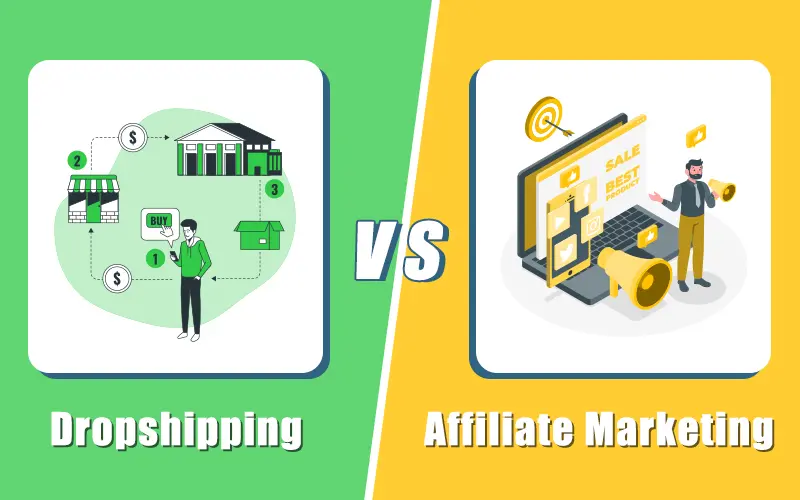
How Dropshipping Works
- Set up an online store on Shopify, WooCommerce, or similar platforms
- Import products from a supplier
- Market products via ads, SEO, or social media
- When a customer orders, the supplier ships directly to them
- You earn the difference between retail and wholesale prices
Example
An entrepreneur sells phone accessories via Shopify. Customers purchase items, and the supplier ships them directly, while the store owner keeps a profit margin of $5–$15 per item.
Advantages of Dropshipping
- No inventory or warehouse needed
- Low upfront cost compared to traditional e-commerce
- Flexibility to sell various products
- Easy to scale by adding new products
Challenges of Dropshipping
- Low profit margins due to high competition
- Reliance on suppliers for quality and delivery
- Customer service responsibility
- High marketing costs to drive traffic
- Returns and refunds can be complex
Types of Dropshipping
Single-Niche Dropshipping
- Focus on one product category
- Easier to brand and target a specific audience
General Store Dropshipping
- Sell a variety of trending products
- Higher risk, but potential for multiple revenue streams
Print-on-Demand Dropshipping
- Sell customized products like t-shirts or mugs
- Supplier prints and ships on demand
Profitability Potential in Dropshipping
Profit margins are generally 10–30%, but volume can compensate. Success relies heavily on effective marketing and supplier reliability.
Example
A Shopify store selling kitchen gadgets earns $15 profit per sale. With 1,000 monthly orders, revenue can reach $15,000.
Affiliate Marketing vs Dropshipping: Key Differences
Understanding the differences helps in choosing the right model.
| Feature | Affiliate Marketing | Dropshipping |
|---|---|---|
| Startup Cost | Very low | Low to moderate |
| Inventory | None | None (supplier handles it) |
| Risk | Low | Moderate to high |
| Profit Margin | 5–50% per sale | 10–30% per sale |
| Customer Service | Handled by the merchant | Handled by you |
| Scalability | High | Moderate to high |
| Marketing Dependency | High (need traffic) | Very high (ads drive sales) |
Which Model Generates Passive Income?
Affiliate marketing is better suited for passive income because:
- You don’t manage products or shipping
- Content continues to generate sales over time
- Minimal ongoing work after initial setup
Dropshipping requires ongoing marketing and customer service to maintain income.
Marketing and Traffic Requirements
Both models require traffic, but strategies differ:
- Affiliate Marketing: SEO, content marketing, email marketing, social media
- Dropshipping: Paid ads (Facebook, TikTok, Google), influencer marketing, SEO
Example
An affiliate blog with 50,000 monthly visitors can earn $2,000 per month, while a dropshipping store may require $1,000–$2,000 per month in ads to achieve the same revenue.
Risk Comparison
Affiliate marketing is lower risk:
- No upfront product purchase
- No shipping or fulfillment issues
- Earnings depend on conversions only
Dropshipping has a higher risk:
- Inventory issues, supplier delays
- Refunds and chargebacks
- Higher marketing costs
Scaling Potential
Both models are scalable, but scalability strategies differ:
- Affiliate Marketing: Increase content production, expand email lists, and explore paid ads
- Dropshipping: Increase ad spend, add new products, optimize store for conversions
Example
A dropshipping store that adds multiple winning products can scale revenue from $5,000 to $50,000 per month, but requires ongoing ad budget and management.
Real-World Examples
Successful Affiliate Marketing Example
Pat Flynn of Smart Passive Income earns over $100,000 per month promoting products like web hosting and online courses via affiliate links, emphasizing trust and valuable content.
Successful Dropshipping Example
A Shopify entrepreneur sold trending gadgets, leveraged TikTok ads, and scaled revenue to over $50,000 per month, showing the potential of paid traffic and viral products.
Combining Both Models
Some entrepreneurs combine affiliate marketing and dropshipping:
- Promote your products alongside related affiliate products
- Build an email list to monetize multiple streams
- Use affiliate income to fund dropshipping ads
Example
A fitness website sells branded supplements (dropshipping) and promotes exercise equipment via affiliate links.
FAQs About Affiliate Marketing vs Dropshipping
Which is more profitable for beginners?
Affiliate marketing is generally safer and easier to start, while dropshipping has higher revenue potential but also higher risk.
Do I need a website for both models?
Yes, a website or blog significantly improves credibility and conversions, though social media platforms can also work.
How much does it cost to start each business?
- Affiliate Marketing: $100–$500 (domain, hosting, email tools)
- Dropshipping: $500–$2,000 (store setup, ads, tools)
Which requires more time investment?
Dropshipping requires more ongoing management for customer service and ad campaigns, while affiliate marketing is more content-focused.
Can I automate income in both models?
Affiliate marketing offers more passive income potential through evergreen content. Dropshipping requires ongoing ad management and customer service, making automation more limited.
Conclusion: Which Is More Profitable?
The profitability of affiliate marketing vs dropshipping depends on your goals, skills, and resources:
- Affiliate Marketing: Best for beginners, passive income, lower risk, content-driven, and long-term scalability.
- Dropshipping: Higher revenue potential, more control over products, requires active management, higher risk, and heavier dependence on paid ads.
For most beginners seeking low-risk entry, affiliate marketing is the smarter choice. Dropshipping can be highly profitable for those willing to invest in ads, handle customer service, and test multiple products. Many successful online entrepreneurs combine both models to diversify income streams.