Types of Laws in the World: A Global Legal Overview
Law is the backbone of any organized society. It provides structure, maintains order, protects individual rights, and ensures justice. While every country has its own legal framework, most laws around the world fall into certain categories or legal systems. Understanding these types of laws helps us grasp how different societies operate and how justice is administered across borders.
In this blog post, we’ll explore the major types of laws in the world, with real-world examples, key characteristics, and their role in modern legal systems.
What Are Laws?
Laws are formal rules established by governing bodies to regulate behavior. They can be enforced through penalties, such as fines or imprisonment, and they serve to protect the public, maintain peace, and deliver justice.
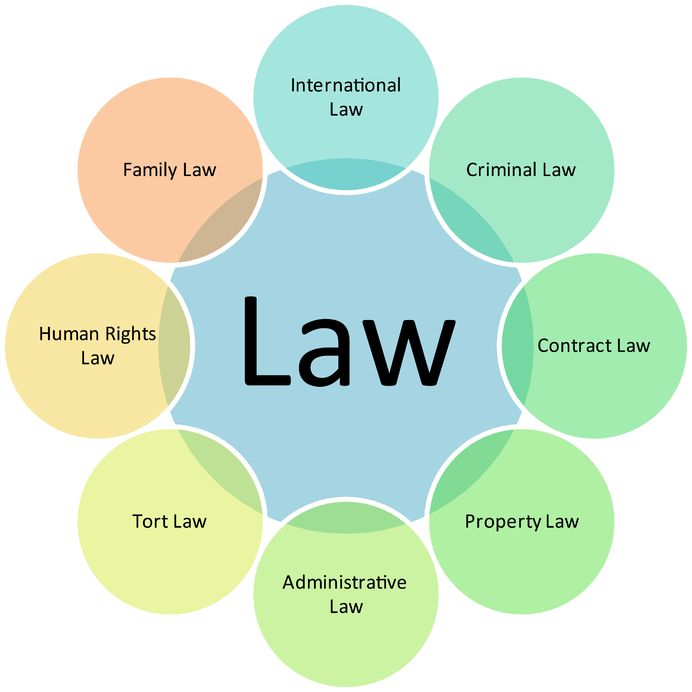
Globally, laws can be grouped by type (e.g., criminal, civil) or by legal system (e.g., common law, civil law). Let’s explore both classifications in detail.

1. Criminal Law
Criminal law deals with offenses that are considered harmful to society. These include crimes like theft, assault, murder, drug trafficking, and fraud.
- Purpose: To punish wrongdoers and deter future crimes.
- Penalties: Imprisonment, fines, probation, or community service.
- Example countries: The U.S., India, Russia, and South Africa all have robust criminal law codes.
2. Civil Law
Civil law governs disputes between private parties, such as individuals or companies. These are non-criminal issues that involve compensation or specific performance rather than punishment.
- Examples: Contract disputes, property disputes, family law (like divorce or child custody), and torts (personal injury claims).
- Outcomes: Typically, financial compensation or court orders.
- Widely used in: Europe, Latin America, and parts of Asia.
- Key point: Civil law is not the same as the “civil law system,” which refers to a specific legal tradition discussed below.
3. Common Law
Common law is a legal system based on court precedents and judicial decisions rather than codified statutes alone. Judges play a major role in shaping the law through interpretation.
- Used in: the United States, the United Kingdom, Canada, Australia, and other former British colonies.
- Main feature: Precedent—past decisions guide future rulings.
- Advantage: More flexible and adaptable to new situations.
This system is distinct from civil law systems (next section), which rely more on detailed written codes.
4. Civil Law System (Code-Based Law)
Not to be confused with “civil law” as a legal category, the civil law system is the most widespread legal system globally. It relies on comprehensive legal codes rather than case law.
- Used in: France, Germany, Japan, South Korea, and most of Latin America.
- Main source of law: Written statutes and codes.
- Judges’ role: Apply the code; less room for judicial interpretation compared to common law.
5. Constitutional Law
Constitutional law involves the interpretation and application of a country’s constitution. It defines the structure of government, fundamental rights, and the limits of governmental power.
- Focus areas: Separation of powers, individual freedoms, checks and balances.
- Common in: All countries with written constitutions (e.g., U.S., India, Brazil).
- Landmark cases often involve civil liberties, like freedom of speech or equal protection.
This area is central to democracy and often overlaps with political science and human rights law.
6. Administrative Law

Administrative law governs how public agencies operate and how citizens can challenge governmental decisions.
- Examples: Immigration rulings, environmental regulations, and social security appeals.
- Role: Ensures accountability and transparency in public administration.
- Used in: Most modern governments, especially in democracies.
7. International Law
International law refers to rules and principles that govern relations between countries, as well as interactions between governments and global organizations.
- Examples: United Nations treaties, trade agreements, laws of war, and environmental protocols.
- Branches: Public international law, private international law, and supranational law.
- Used by: Nations, multinational corporations, and NGOs.
- Hot topics: Maritime law, human rights law, refugee law, and climate change treaties.
8. Religious Law
Some legal systems are based on religious texts and principles. These laws vary depending on the religion and country.
- Sharia Law: Islamic legal system derived from the Quran and Hadith, used in countries like Saudi Arabia, Iran, and parts of Nigeria.
- Halakha: Jewish law used in some family and religious matters in Israel.
- Canon Law: Legal system of the Catholic Church.
Religious law may operate alongside secular law or as a separate legal system altogether.
9. Customary Law
Customary law is based on long-standing traditions and customs within a community or society. It often exists in indigenous communities and may or may not be formally recognized by national law.
- Examples: African customary law, Aboriginal law in Australia, Native American tribal law.
- Nature: Unwritten, passed down orally, based on tradition.
- Legal recognition: Some countries incorporate customary law into their national legal systems.
10. Tort Law
Tort law is a branch of civil law that deals specifically with civil wrongs that cause harm to individuals or property.
- Examples: Medical malpractice, defamation, product liability, negligence.
- Goal: Compensate the victim for harm or injury.
- Common in: Common law countries like the U.S. and the UK.

11. Commercial Law
Also known as business or corporate law, commercial law governs trade, commerce, and sales. It’s essential for maintaining economic stability and business regulation.
- Topics covered: Company formation, contracts, bankruptcy, mergers, and acquisitions.
- Industries served: All—from tech to real estate and finance.
- High demand areas: U.S., China, EU nations, and other trade-heavy regions.
12. Labor and Employment Law
This body of law governs the relationship between employers and employees.
- Key areas: Wages, workplace safety, labor unions, discrimination, and harassment.
- Importance: Ensures fair treatment of workers and compliance by employers.
- Global use: Every industrialized nation has some form of labor law.
Final Thoughts
Understanding the types of laws in the world gives us insight into how societies function, resolve disputes, and protect human rights. From criminal codes to constitutional protections and international treaties, laws form the foundation of civilization.
As globalization continues and legal challenges grow more complex, it’s more important than ever to appreciate the variety of legal systems and the purpose they serve.