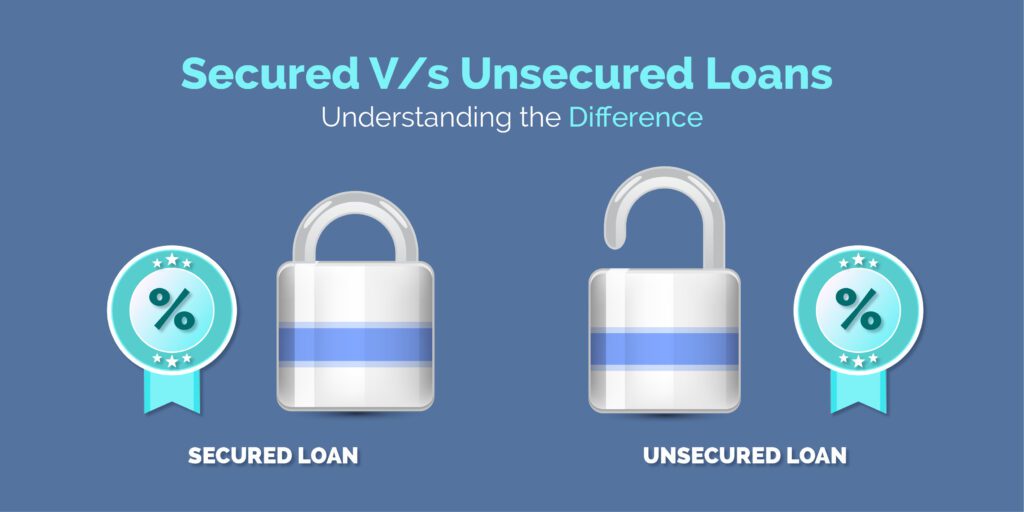
Unsecured vs Secured Loans. When it comes to borrowing money, understanding the difference between unsecured and secured loans is crucial. Both types of loans can help meet financial needs, but they differ significantly in terms of risk, interest rates, repayment terms, and eligibility requirements. Choosing the right loan type can save you money, protect your assets, and improve your financial stability.
This comprehensive guide explores unsecured versus secured loans, highlights their benefits and drawbacks, provides real-life examples, and answers frequently asked questions to help you make an informed decision.
What Are Secured Loans?
A secured loan is a type of loan backed by collateral, such as a house, car, or savings account. The collateral acts as security for the lender, reducing their risk. If the borrower defaults, the lender has the right to seize the collateral to recover the loan balance.
Common Examples of Secured Loans
- Mortgage loans
- Auto loans
- Home equity loans
- Secured personal loans
Key Features of Secured Loans
- Lower interest rates compared to unsecured loans
- Higher borrowing limits due to reduced lender risk
- Longer repayment terms in some cases
- Requirement for collateral
Example
Anna wants to buy a car worth $20,000. She applies for an auto loan and pledges the car as collateral. The lender offers a 5-year loan at 6% APR. If Anna defaults, the lender can repossess the car, minimizing their loss.
What Are Unsecured Loans?
Unsecured loans do not require collateral. Approval is based primarily on creditworthiness, income, and debt-to-income ratio. Because these loans are riskier for lenders, interest rates are usually higher than secured loans.
Common Examples of Unsecured Loans
- Personal loans
- Credit cards
- Student loans
- Lines of credit
Key Features of Unsecured Loans
- No collateral required
- Faster approval in many cases
- Higher interest rates due to higher lender risk
- Lower borrowing limits compared to secured loans
Example
John wants $10,000 to consolidate credit card debt. He applies for a personal loan without collateral. The lender approves the loan at 12% APR for 3 years. If John defaults, the lender cannot seize property but may pursue legal action or report it to credit bureaus.
Interest Rates: Secured vs Unsecured Loans
One of the primary differences between secured and unsecured loans is the interest rate.
Secured Loans
- Typically offer lower interest rates
- Rates range from 4% to 8% for mortgages or auto loans
- Reduced lender risk due to collateral
Unsecured Loans
- Generally have higher interest rates
- Rates range from 8% to 36%, depending on credit score
- Higher cost reflects increased risk to the lender
Example
- Secured loan: $15,000 auto loan at 6% APR over 5 years → Total interest: $2,400
- Unsecured loan: $15,000 personal loan at 14% APR over 5 years → Total interest: $5,500
Choosing a secured loan can save more than $3,000 in interest over the life of the loan.
Borrowing Limits
Secured loans usually allow higher borrowing limits because the collateral reduces lender risk. Unsecured loans have lower limits, especially for borrowers with poor credit.
Example
- Secured loan: Home equity line of credit up to $50,000
- Unsecured loan: Personal loan up to $25,000
Higher borrowing limits can make secured loans more suitable for large expenses like home renovations or major purchases.
Repayment Terms
Secured loans often have longer repayment periods, which can reduce monthly payments but increase total interest. Unsecured loans typically have shorter repayment terms, resulting in higher monthly payments but less total interest paid if repaid on time.
Example
- Secured mortgage: $200,000 over 30 years → Lower monthly payment, more total interest
- Unsecured personal loan: $20,000 over 5 years → Higher monthly payment, less total interest
The choice depends on financial goals and monthly cash flow.
Risks Associated With Secured Loans
While secured loans have lower interest rates, they carry the risk of losing collateral if you default. This can have significant financial consequences.
Examples
- Defaulting on a mortgage can result in foreclosure.
- Failing to pay an auto loan may lead to vehicle repossession.
Lenders may also pursue legal action if collateral does not fully cover the loan balance.
Risks Associated With Unsecured Loans
Unsecured loans carry no direct risk of losing property, but default can still have serious consequences.
Examples
- Negative impact on credit score
- Collection efforts, including wage garnishment
- Higher interest rates on future loans due to default
Defaulting on unsecured loans does not lead to asset loss but can damage financial reputation and borrowing capacity.
Which Is Better?
The answer depends on your financial situation, borrowing needs, and risk tolerance.
Secured Loans Are Better If:
- You need a large loan
- You want lower interest rates
- You can provide collateral
- You are confident in your repayment ability
Unsecured Loans Are Better If:
- You want to avoid risking property
- You need a smaller loan
- You prefer faster, simpler application processes
- You have a good credit score to qualify for reasonable interest rates
Real-Life Examples
Example 1: Secured Loan for Home Renovation
Liam wants to renovate his kitchen and applies for a $30,000 home equity loan. Interest rate: 5.5% APR over 10 years. Monthly payment: $330. Collateral: Home. Liam benefits from a lower rate and higher borrowing limit, making this loan cost-effective.
Example 2: Unsecured Loan for Emergency Expenses
Sophia needs $8,000 for unexpected medical bills. She applies for a personal loan with a 14% APR over 3 years. Monthly payment: $270. No collateral is required, allowing her to get funds quickly without risking property.
Pros and Cons Summary
| Feature | Secured Loans | Unsecured Loans |
|---|---|---|
| Collateral | Required | Not required |
| Interest Rates | Lower | Higher |
| Borrowing Limits | Higher | Lower |
| Risk of Asset Loss | Yes | No |
| Approval Speed | Slower | Faster |
| Best For | Large expenses, low interest | Small expenses, quick funding |
Tips to Choose the Right Loan
- Assess your credit score – Higher credit scores can qualify for better unsecured loan rates.
- Evaluate risk tolerance – Can you afford to lose collateral if you default?
- Compare interest rates – Lower interest saves money over time.
- Consider loan purpose – Large purchases favor secured loans, emergencies may favor unsecured loans.
- Check fees and penalties – Origination fees, prepayment penalties, and late fees affect total cost.
FAQs About Secured vs Unsecured Loans
Can I convert an unsecured loan to a secured loan?
Some lenders may allow you to provide collateral after loan approval, but it depends on the lender’s policies.
Are unsecured loans safer than secured loans?
Unsecured loans are safer for your assets since no collateral is required, but default still affects your credit and may result in collection actions.
Which loan type rebuilds credit faster?
Both can rebuild credit if you make timely payments, but unsecured loans often have faster approval for borrowers with good credit.
Can I get a large unsecured loan?
Large unsecured loans are harder to obtain and usually require excellent credit, high income, or a co-signer.
Do secured loans always have lower rates?
Generally, yes, because collateral reduces lender risk, but rates depend on credit score, loan type, and market conditions.
How to Apply for Each Type of Loan
Secured Loan Application
- Identify collateral and estimate value
- Gather financial documents (income, taxes, credit report)
- Compare lenders for rates and terms
- Apply and provide collateral details
- Review and sign the loan agreement
Unsecured Loan Application
- Check credit score and report
- Determine the desired loan amount and term
- Compare lenders and interest rates
- Submit an online or in-person application
- Receive approval and fund disbursement
Conclusion: Unsecured vs Secured Loans
Choosing between secured and unsecured loans depends on your financial goals, borrowing needs, and risk tolerance. Secured loans offer lower interest rates and higher limits, but put your assets at risk. Unsecured loans provide faster access and no collateral requirement, but come with higher interest rates and smaller limits.
By understanding the differences, evaluating your financial situation, and comparing lenders, you can make an informed decision that saves money, protects your assets, and meets your financial needs. Both loan types can be valuable tools when used responsibly, and selecting the right one ensures long-term financial stability.