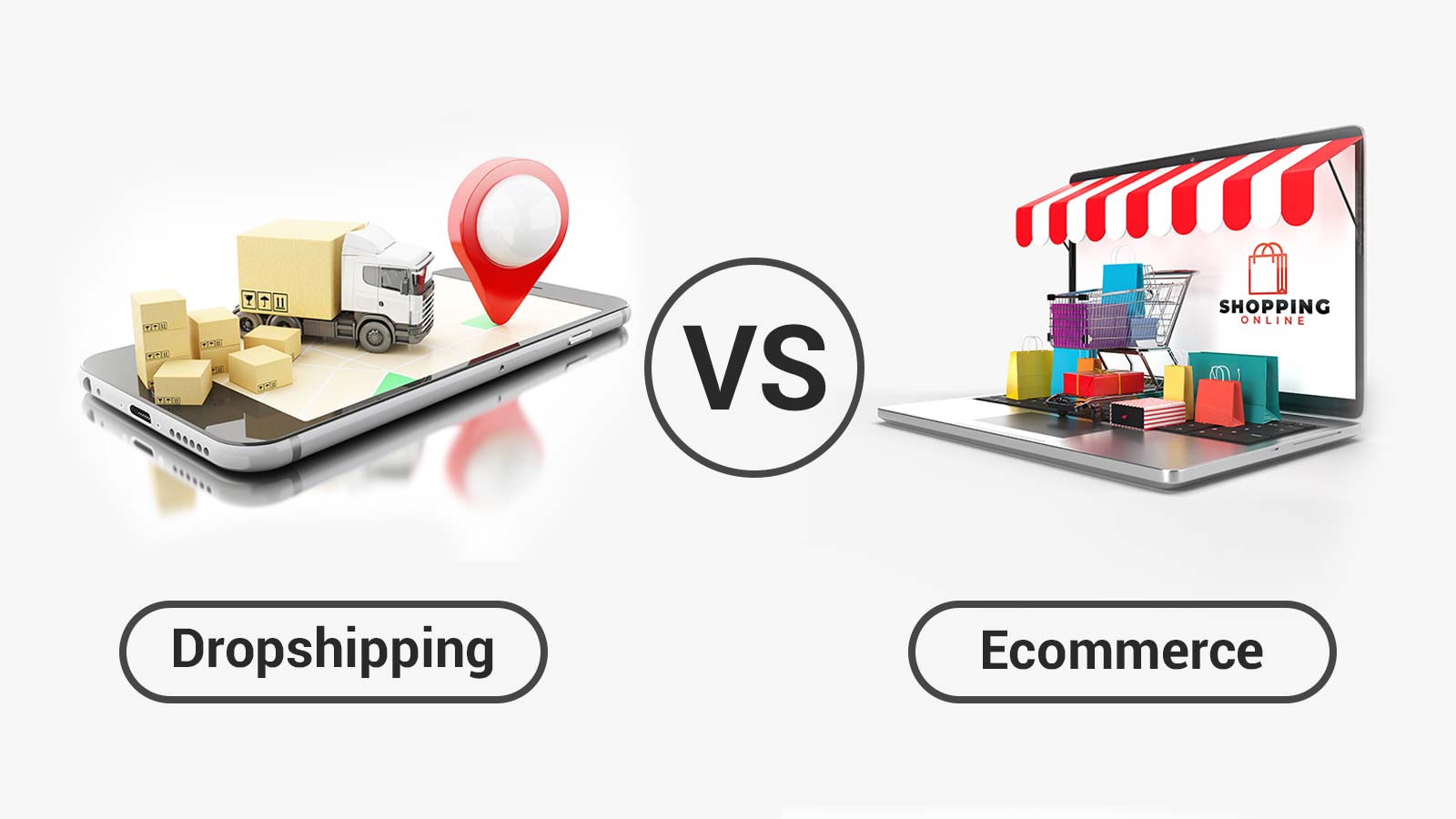
E-commerce vs Dropshipping: Which Online Business Model Works Best?. Starting an online business has never been more accessible. Among the many options available, ecommerce and dropshipping stand out as two of the most popular and profitable online business models. While both involve selling products online, they differ significantly in how they operate, scale, and generate profits.
This in-depth guide compares e-commerce vs. dropshipping, explains how each model works, highlights advantages and disadvantages, provides real-world examples, and answers common questions to help you decide which online business model works best for your goals.
Understanding Ecommerce and Dropshipping
Before comparing the two, it’s important to clearly understand what each model involves.
What Is Ecommerce?
Ecommerce refers to selling physical or digital products online, typically by owning inventory and managing order fulfillment.
Common ecommerce models include:
- Selling your own branded products
- Private labeling
- Handmade or custom products
- Wholesale and retail resale
In ecommerce, the business owner usually handles inventory storage, packaging, shipping, and customer service, either directly or through third-party fulfillment services.
What Is Dropshipping?
Dropshipping is a form of ecommerce where the seller does not keep products in stock. Instead, orders are forwarded to a supplier who ships products directly to the customer.
Key characteristics of dropshipping:
- No inventory storage
- Lower upfront costs
- Supplier handles fulfillment
- The seller focuses on marketing and sales
How E-commerce Works Step by Step
Product Selection and Sourcing
The business owner chooses products, manufacturers, or suppliers and purchases inventory upfront.
Inventory Management
Products are stored in a warehouse, home, or fulfillment center.
Order Fulfillment
Once an order is placed, the seller packages and ships the product or uses a third-party fulfillment service.
Customer Support
The seller handles returns, exchanges, and customer inquiries.
How Dropshipping Works Step by Step
Product Research
The seller selects products from dropshipping suppliers.
Online Store Setup
Products are listed on an e-commerce platform.
Customer Orders
Customers place orders and pay the seller.
Supplier Fulfillment
The seller forwards the order to the supplier, who ships it directly to the customer.
After-Sales Support
The seller manages customer communication, even though they don’t handle the product physically.
Startup Costs Comparison
E-commerce Startup Costs
E-commerce generally requires a higher initial investment.
Typical costs include:
- Inventory purchase
- Storage or fulfillment fees
- Packaging materials
- Branding and design
- Website and marketing
Example:
A private-label skincare store may invest in product manufacturing, packaging, and inventory before making any sales.
Dropshipping Startup Costs
Dropshipping has lower upfront costs.
Typical costs include:
- Website setup
- Marketing and advertising
- App or supplier integrations
Example:
A dropshipping store selling home decor products can start without purchasing inventory upfront.
Profit Margins Compared
E-commerce Profit Margins
E-commerce businesses often enjoy higher profit margins because they buy products in bulk and control pricing.
Average margins:
- Branded ecommerce: higher margins
- Wholesale ecommerce: moderate margins
Example:
A brand selling custom fitness apparel may achieve strong margins by controlling production and branding.
Dropshipping Profit Margins
Dropshipping margins are typically lower due to higher product costs and competition.
Average margins:
- Often smaller per sale
- Reliant on volume
Example:
A dropshipping store selling trending gadgets may rely on advertising volume rather than high margins.
Control Over Branding and Customer Experience
E-commerce Branding Advantages
E-commerce offers full control over branding.
Benefits include:
- Custom packaging
- Brand storytelling
- Product quality control
- Long-term brand loyalty
Example:
A premium coffee brand uses branded packaging and inserts to create a memorable customer experience.
Dropshipping Branding Limitations
Dropshipping offers limited branding options.
Challenges include:
- Generic packaging
- Limited customization
- Inconsistent product quality
Some suppliers offer custom branding, but it often comes at a higher cost.
Inventory and Fulfillment Management
E-commerce Inventory Challenges
Managing inventory requires planning and logistics.
Pros:
- Better stock control
- Faster shipping options
Cons:
- Storage costs
- Risk of unsold inventory
Example:
A fashion ecommerce store must forecast demand accurately to avoid overstocking.
Dropshipping Fulfillment Challenges
Dropshipping reduces inventory risk but introduces other challenges.
Pros:
- No storage required
- No upfront inventory risk
Cons:
- Longer shipping times
- Supplier reliability issues
Example:
A dropshipping store sourcing products internationally may face customer complaints about delayed deliveries.
Shipping Speed and Customer Satisfaction
E-commerce Shipping Experience
E-commerce businesses can offer faster shipping.
Advantages:
- Local warehouses
- Express delivery options
- Better tracking
Example:
An e-commerce store using a fulfillment center can offer two-day shipping.
Dropshipping Shipping Experience
Dropshipping shipping speed depends on suppliers.
Challenges:
- International shipping delays
- Limited tracking accuracy
This can impact customer satisfaction and repeat purchases.
Scalability and Growth Potential
Scaling E-commerce Businesses
E-commerce scaling requires investment.
Growth challenges:
- Inventory expansion
- Warehouse space
- Team management
However, strong branding allows long-term growth and stability.
Scaling Dropshipping Businesses
Dropshipping scales more easily initially.
Advantages:
- No inventory limitations
- Quick product testing
Challenges:
- Increased customer support
- Supplier capacity limits
Dropshipping is often used to test products before transitioning to e-commerce.
Marketing and Advertising Differences
E-commerce Marketing Strategies
E-commerce marketing focuses on long-term brand building.
Common strategies:
- SEO content marketing
- Email marketing
- Influencer partnerships
- Loyalty programs
Example:
A skincare brand builds trust through educational content and email campaigns.
Dropshipping Marketing Strategies
Dropshipping relies heavily on paid advertising.
Common channels:
- Social media ads
- Influencer promotions
- Trend-based marketing
Example:
A dropshipping store promotes trending products through short-form video ads.
Risk and Stability Comparison
E-commerce Risks
- Inventory loss
- Higher upfront costs
- Slower initial launch
However, e-commerce offers greater long-term stability.
Dropshipping Risks
- Supplier dependency
- Intense competition
- Platform restrictions
Dropshipping can be profitable, but is often less stable long-term.
Legal and Compliance Considerations
E-commerce Compliance
E-commerce businesses must manage:
- Product regulations
- Shipping laws
- Taxes and duties
Dropshipping Compliance
Dropshipping sellers must ensure suppliers meet legal standards and product safety requirements.
Failure to comply can damage reputation and finances.
Real-World Business Examples
E-commerce Example
A handmade jewelry brand sells through its website and social media. By controlling product quality and branding, the business builds loyal customers and repeat sales.
Dropshipping Example
A trend-focused store sells viral tech accessories using dropshipping. Products change frequently based on trends and ad performance.
Which Model Is Better for Beginners?
When E-commerce Is Better
E-commerce is ideal if you:
- Want to build a long-term brand
- Can invest upfront
- Value quality control
When Dropshipping Is Better
Dropshipping is ideal if you:
- Have limited startup capital
- Want to test products quickly
- Prefer low-risk experimentation
Can E-commerce and Dropshipping Be Combined?
Many businesses start with dropshipping to test demand, then move to ecommerce by stocking best-selling products. This hybrid approach reduces risk and improves profitability.
Common Mistakes to Avoid
Mistakes in E-commerce
- Overstocking inventory
- Ignoring cash flow
- Poor supplier relationships
Mistakes in Dropshipping
- Choosing unreliable suppliers
- Ignoring shipping times
- Competing only on price
FAQ About Ecommerce vs Dropshipping
Is e-commerce better than dropshipping?
It depends on goals. E-commerce offers higher margins and branding, while dropshipping offers lower startup risk.
Can dropshipping be profitable long-term?
It can be profitable, but competition and supplier dependency make it harder to sustain in the long term.
Do I need technical skills for either model?
Basic website and marketing skills are helpful, but many tools simplify setup.
Which model is more beginner-friendly?
Dropshipping is often easier to start, while e-commerce requires more planning.
Can I switch from dropshipping to e-commerce?
Yes, many successful brands begin with dropshipping and later stock inventory.
Conclusion
Both ecommerce and dropshipping offer viable paths to building an online business, but they serve different goals and business styles. Ecommerce provides greater control, stronger branding, and higher long-term profitability, while dropshipping offers low startup costs, flexibility, and faster entry.
Choosing the right model depends on your budget, experience, risk tolerance, and long-term vision. For entrepreneurs focused on building a sustainable brand, ecommerce often works best. For those seeking quick testing and low initial investment, dropshipping can be an excellent starting point.
By understanding the strengths and limitations of each model, you can confidently choose the online business strategy that aligns with your goals and sets you up for long-term success.